Home is a Hollow
Australian Museum
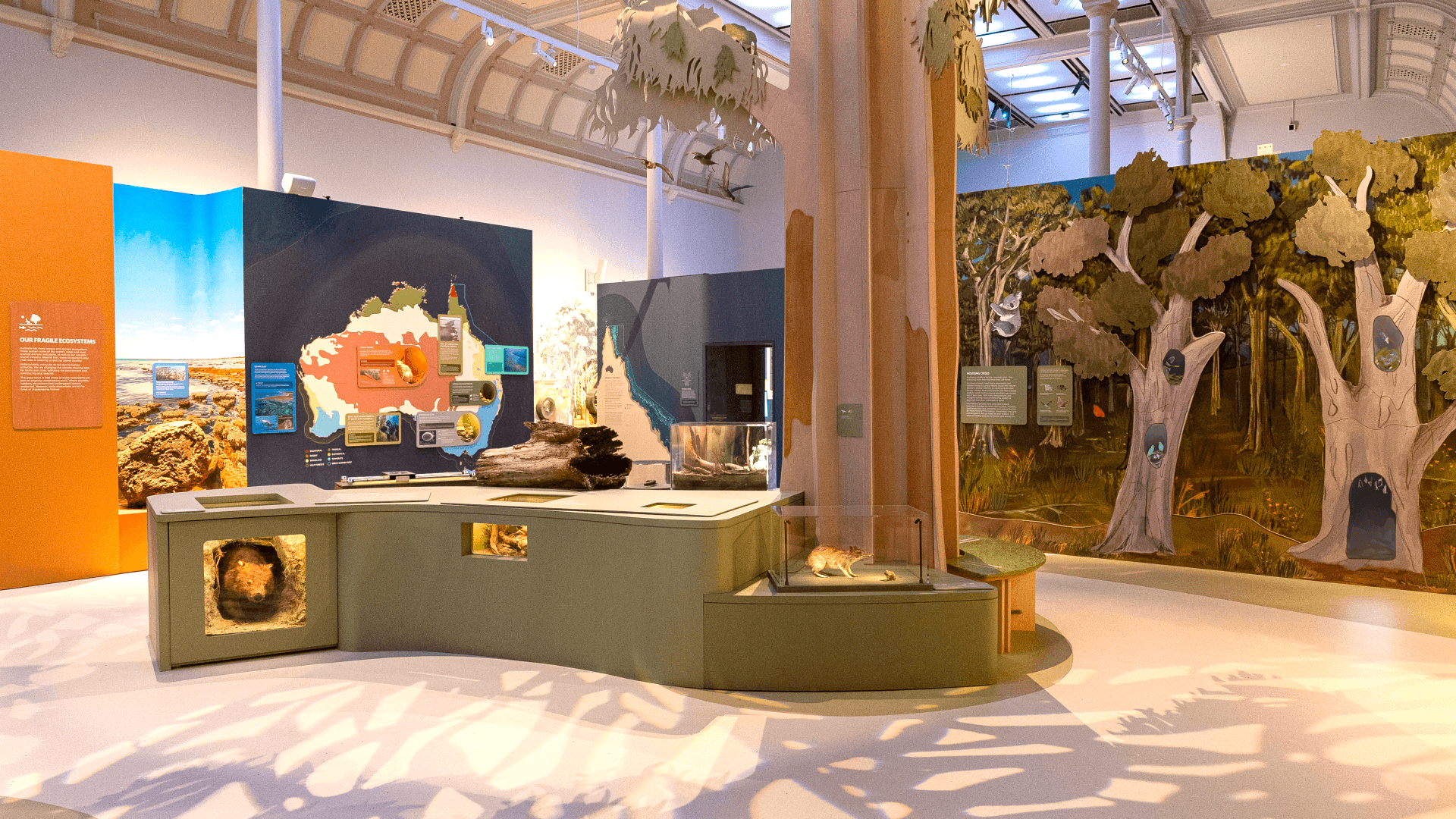
Home is a Hollow is a multi-screen animated installation created for the Australian Museum’s Surviving Australia exhibition.
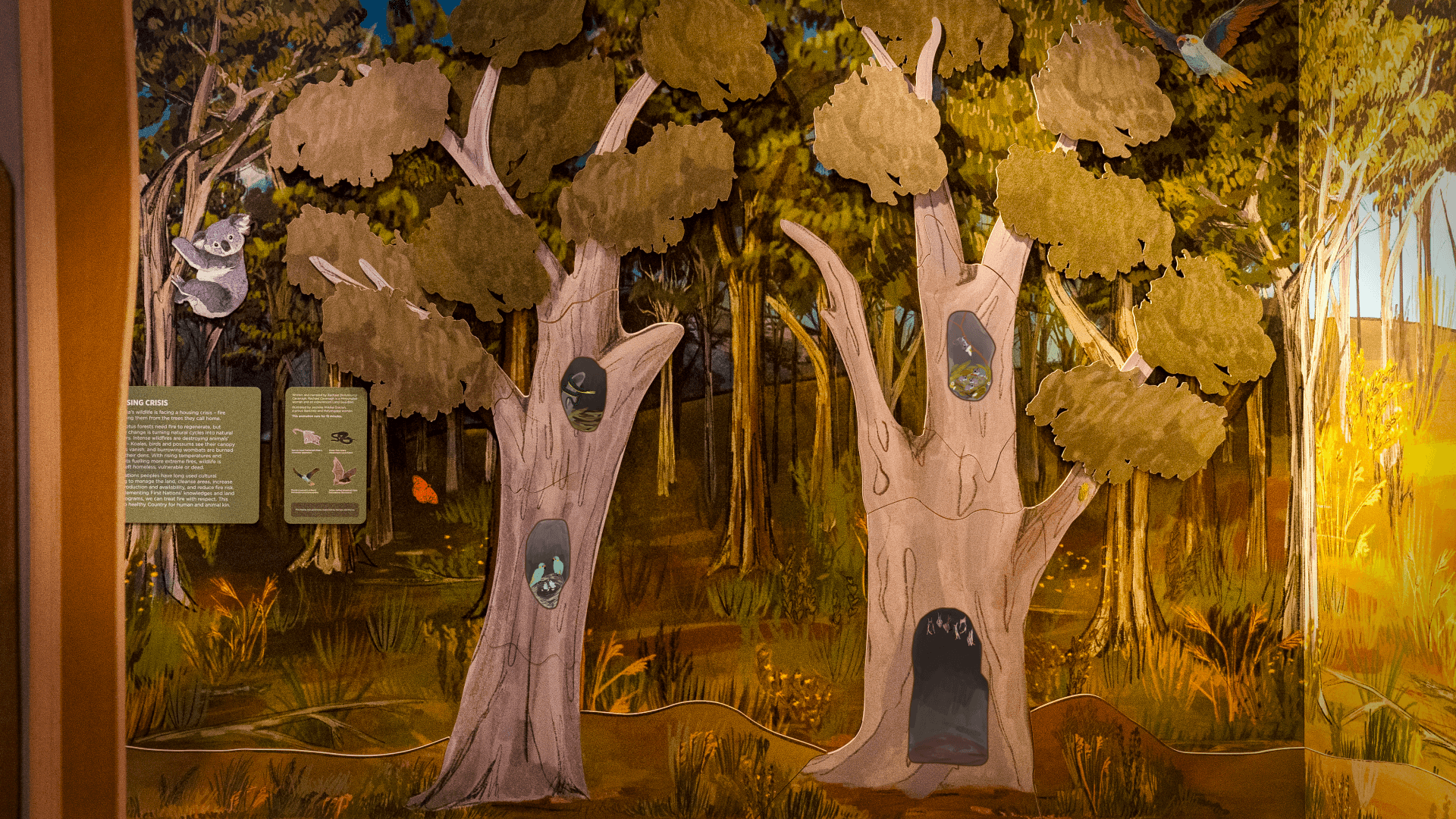
Developed in collaboration with Barkindji, Malyangapa, Romanian and Australian multimedia artist and illustrator, Jasmine Craciun, the installation combines 60 minutes of original looping animation, immersive sound design and large-scale illustrated environments to explore the hidden ecosystems living within Australian tree hollows.
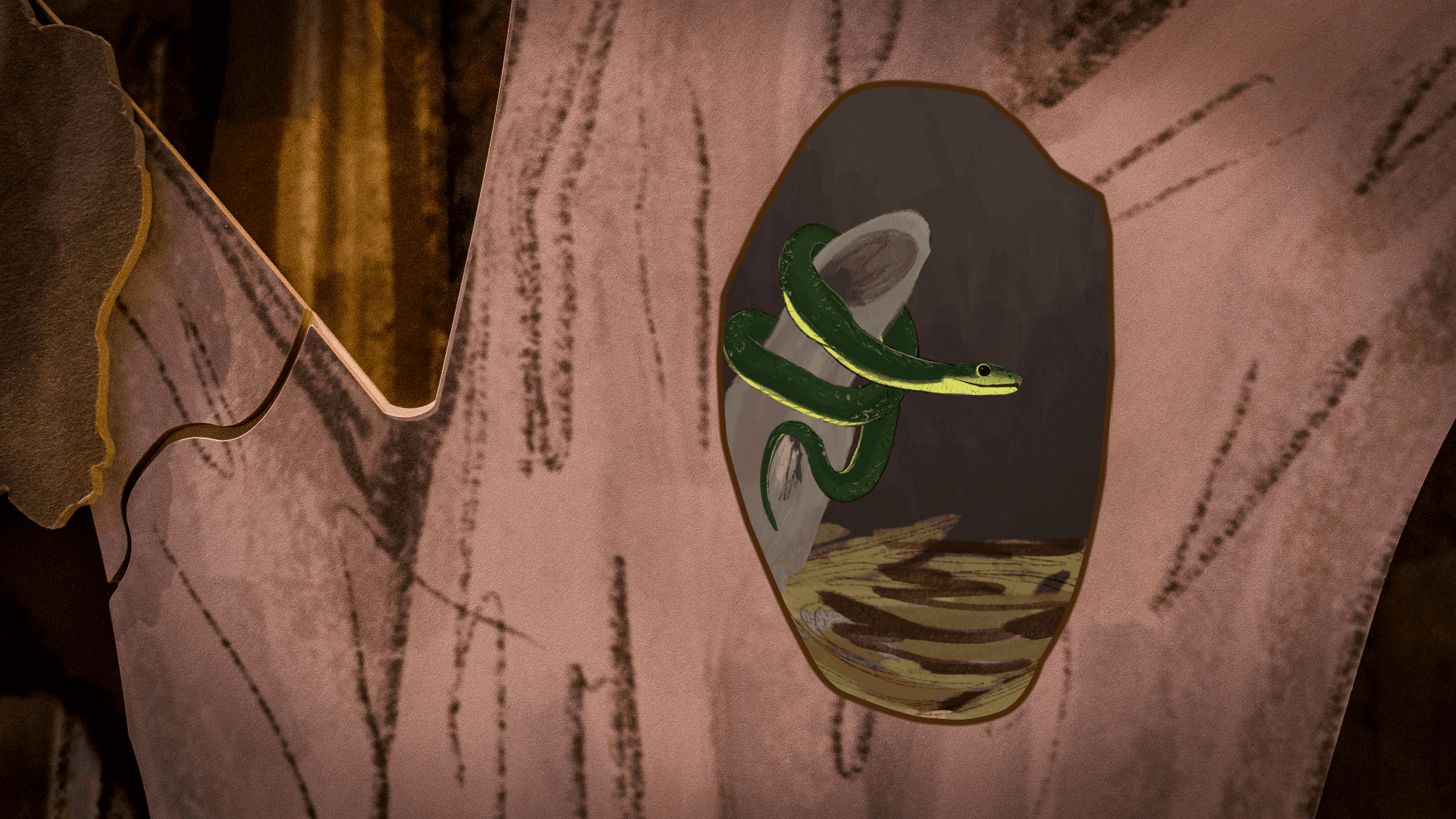
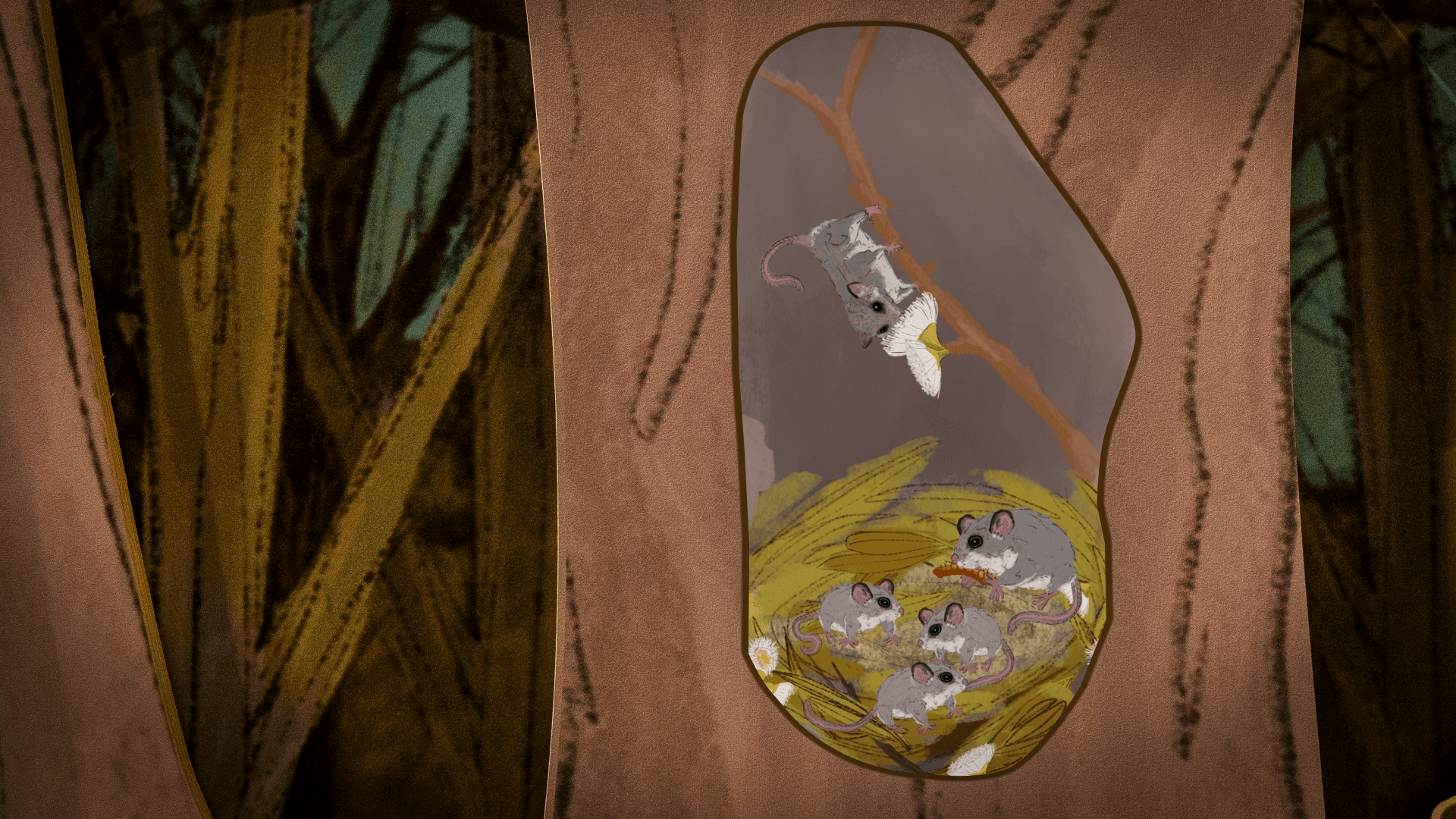
Presented across four integrated screens embedded within a large scale illustration and sculptural tree forms, the work follows the lives of green tree snakes, purple-crowned lorikeets, feather-tail gliders and microbats as they navigate a changing landscape shaped by fire, shelter and survival.
The Approach
The project was designed specifically for a museum exhibition environment, requiring animation that could communicate environmental storytelling in a format that was visually engaging, accessible and suitable for continuous looping playback.
Working closely with the Australian Museum and Jasmine Craciun’s illustrated style, we developed a visual language that balanced scientific communication with immersive atmosphere and stylised environmental storytelling. Each screen functions as an individual looping narrative while contributing to a larger ecosystem unfolding across the installation.
Visual Style
The visual language of Home is a Hollow draws heavily from Jasmine Craciun’s distinctive illustration style, combining textured environments, stylised Australian flora and expressive environmental lighting to create an immersive forest atmosphere.
The installation balances large scale, detailed environmental illustration with accessible animation design, allowing audiences to quickly engage with the ecological storytelling while discovering smaller moments and behaviours within each looping sequence.
The Result
Home is a Hollow combines stylised animation, immersive sound and large-scale illustration to create an engaging educational experience for museum audiences. You can visit the project as part of the Surviving Australia exhibition at the Australian Museum.